Messages Exhibition 2022
An exhibition is like a publication: exhibiting or publishing means mediating, giving a message. That message can be a brief code, a contrast, or an idea. I think of some messages I have used, such as “limited / unlimited”, or “scattered compact”, or “center and edge”. These are minimal messages that function implicitly in my work. I remember that my professor Max Bense said that the mediation of art is an act of language that depends on a decoding. In the world we live in, the aesthetic message must still be transformed into language to be read. For this, I have gathered in this show nearly fifty works from the period between 2019 and 2022. They are oil on canvas or acrylic paintings of various sizes. It is the last exhibition I will hold in Chile for now and it is an important show for me.
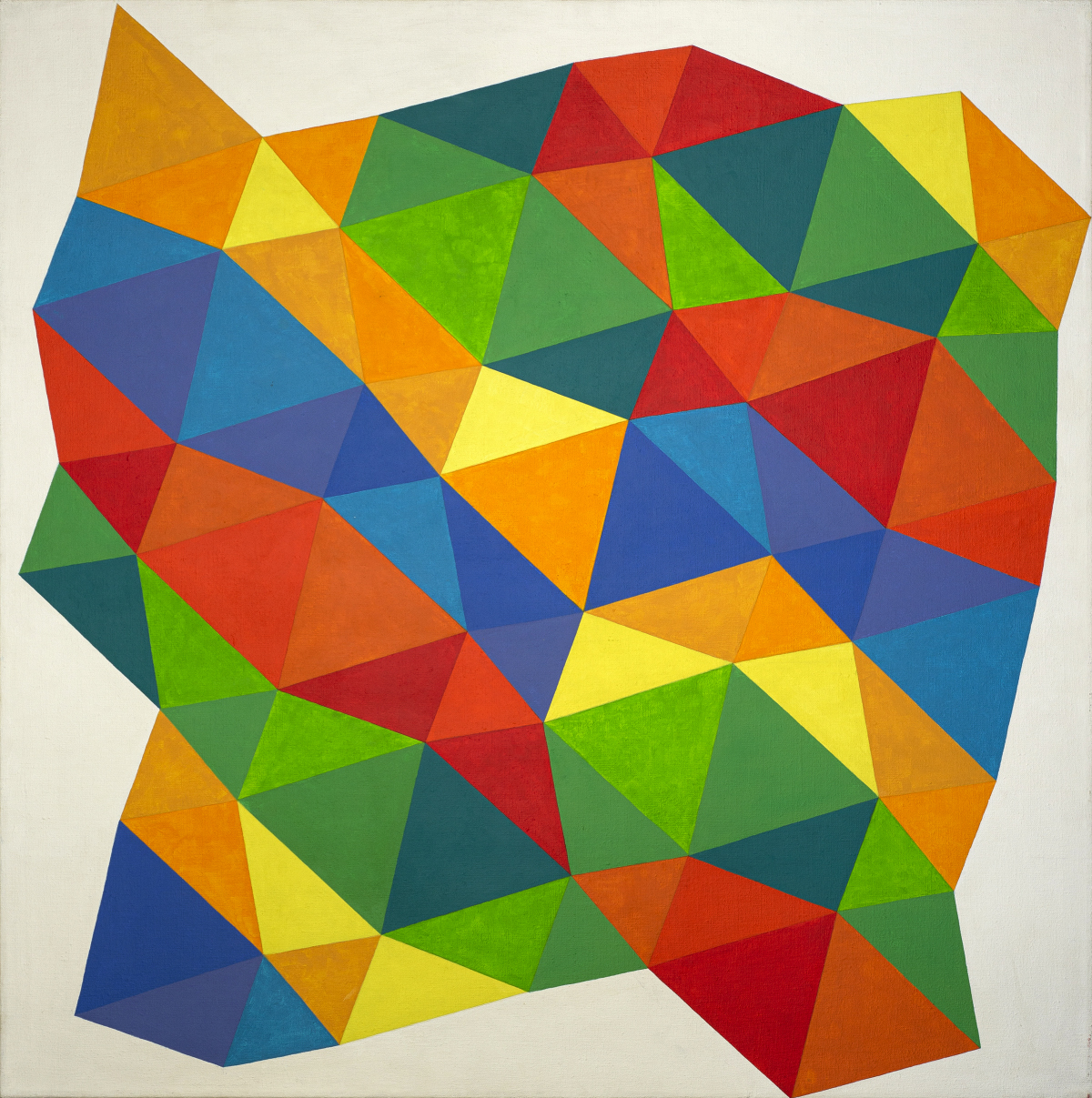
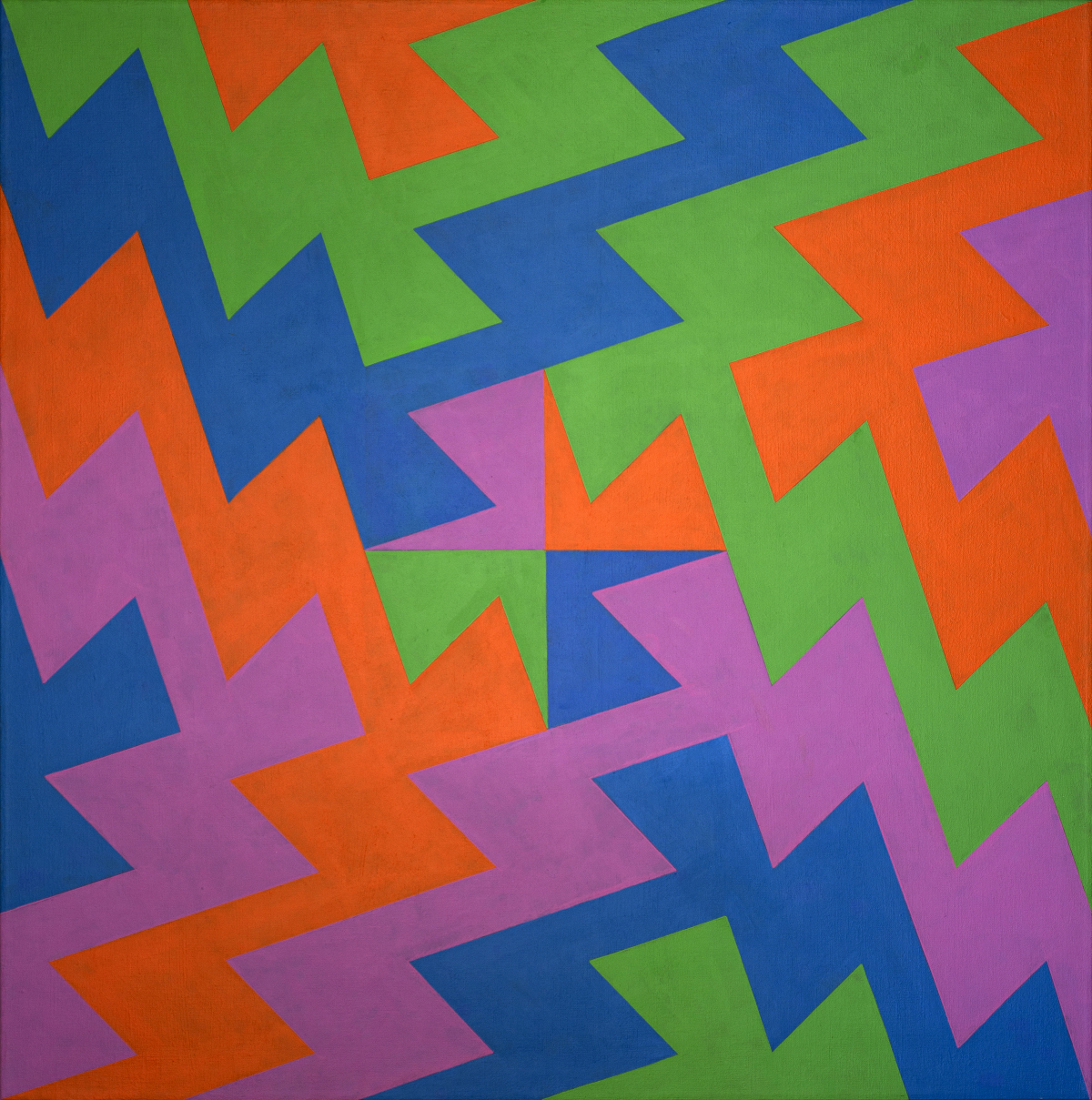
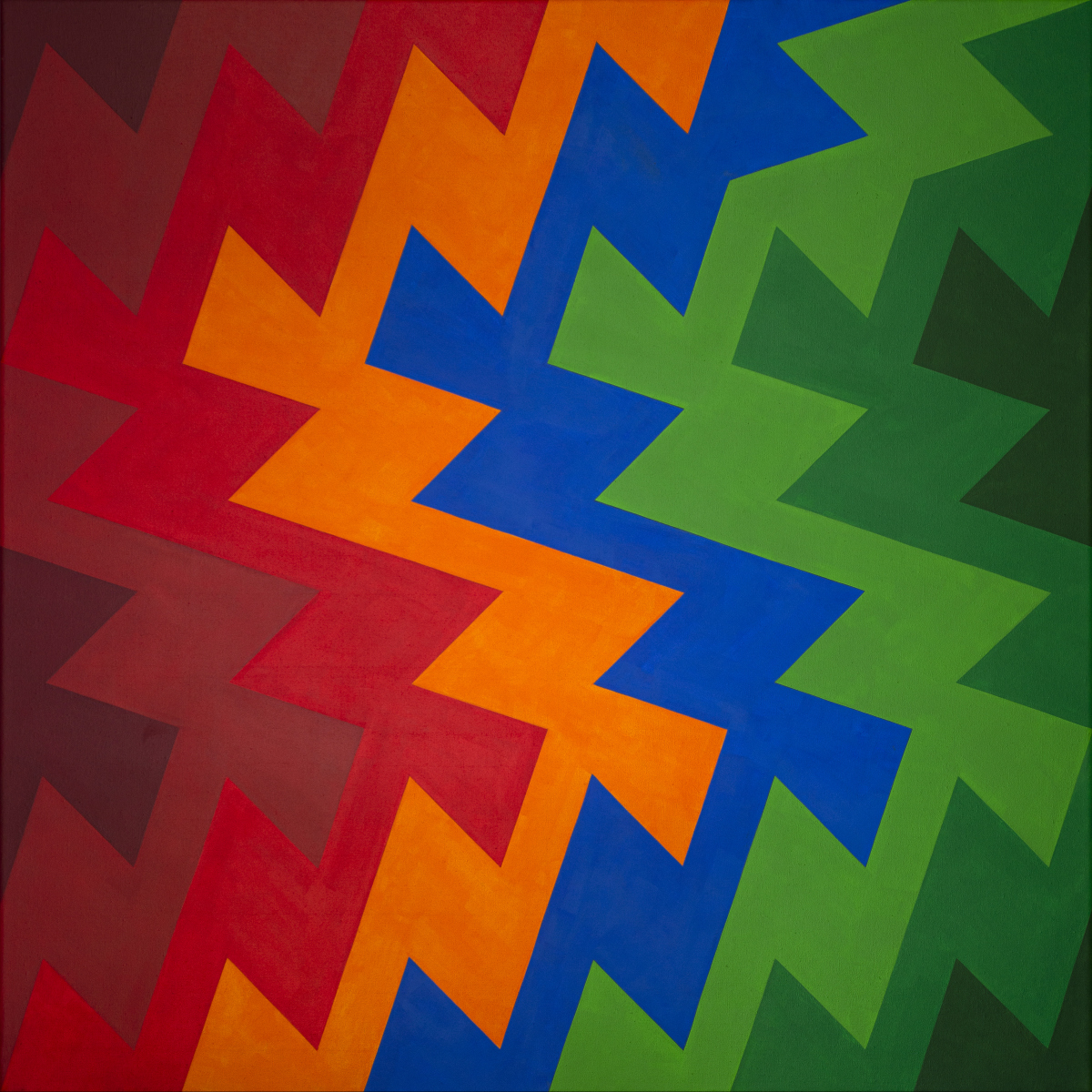
What I want to exhibit now relates to the continuity of the process of increasing complexity in the configurations of my works. Following new series, the patterns I employ become surfaces whose structures disappear completely. Here I have worked with the concept of ‘tessellation’, a term from mathematics referring to the gapless and non-overlapping coverage of the Euclidean plane through partial and uniform surfaces. This series is the continuation of the work previously carried out in the Polygons series.
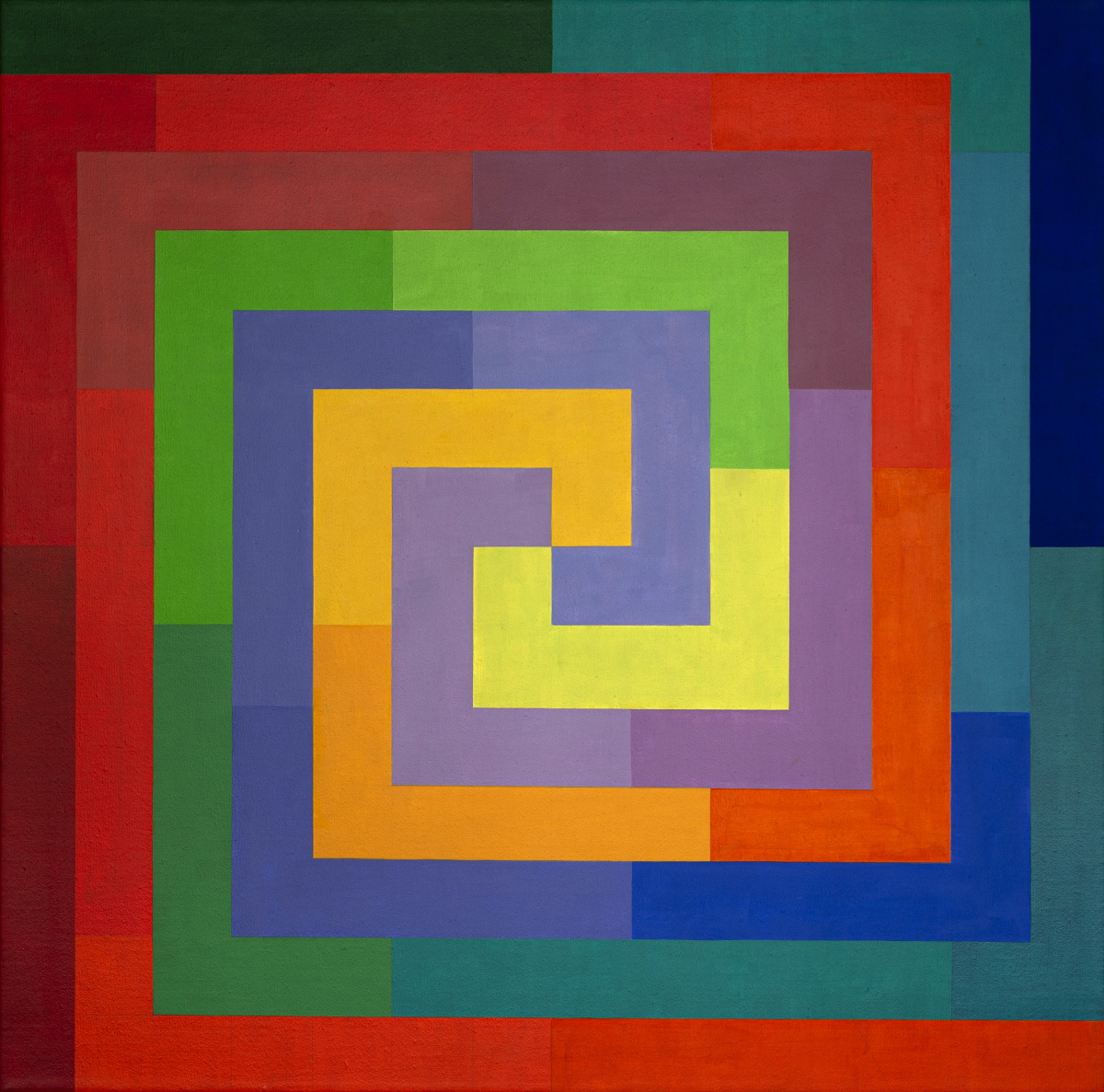
Through the teachings of Helene Nonne Schmidt, I learned Paul Klee's color theory at university. Subsequently, my experience has allowed me to build an entire repertoire that forms the basis of my work. I do not use colors as they come from the tube; all are mixtures. Even black. An example: the last painting I painted consists of three zones where three elements appear in each, and these with four colors. Here one must look at “the interaction of colors”, as Albers said. In this case, we can see how the thirty-six colors adapt in each zone.
If I started by saying that the aesthetic message must still be transformed into language to be read, that entails transferring a message, for example, from science to art. In that step, a space opens for the creation of new knowledge. The mere ability to explain something else already constitutes an act of language capable of transforming. The message is played out in that transformation. That is why, when Max Bill used the expression “from the red dot on the white canvas”, he wanted to explain concrete art and show that aesthetic reality cannot be understood from that color, nor from that surface or shape, but is only effective as a relationship between color and shape, between sensual and mathematical elements. Let us not forget that Theo van Doesburg referred to concrete art to speak of an abstract art that starts from purely geometric shapes and relationships, without any relationship to visible reality.
I do not attempt to abstract myself from reality, but rather seek to create a new one. Therefore, my works should not be understood as illustrations of mathematical problems, despite the fact that logic influences my work. Although the strict and definitive mode of mathematics opens the way to create the work of art, it finally happens when I tell myself that I am going to work with contrasts. And that is no longer based on mathematics. The method then becomes a way of working, knowing that, in the end, there is always an additional theme to the structure.
Cornelia Vargas, May 2022
13 Jul, 2022